 Ninjibot
Loading…
Fanon · by Senshi🐍
A clan living in the high mountains at the border of the Ladn of Wind and the Land of Rivers. Famous for it's members spititual powers and mysterious nature.
Traveling healers and demon hunters/exorcists is what the clan is the most known for, they are otherwise quite mysterious.
#611919#ECE055#000000#3BBA94Common physical traits in the bloodline (hair, eyes, skin tone, build).
Dark red, brown, black or dark blue hair
Green or brown eyes
Unique painted patterns on the face and body in the shades of yellow and orange
Some members have pointy ears
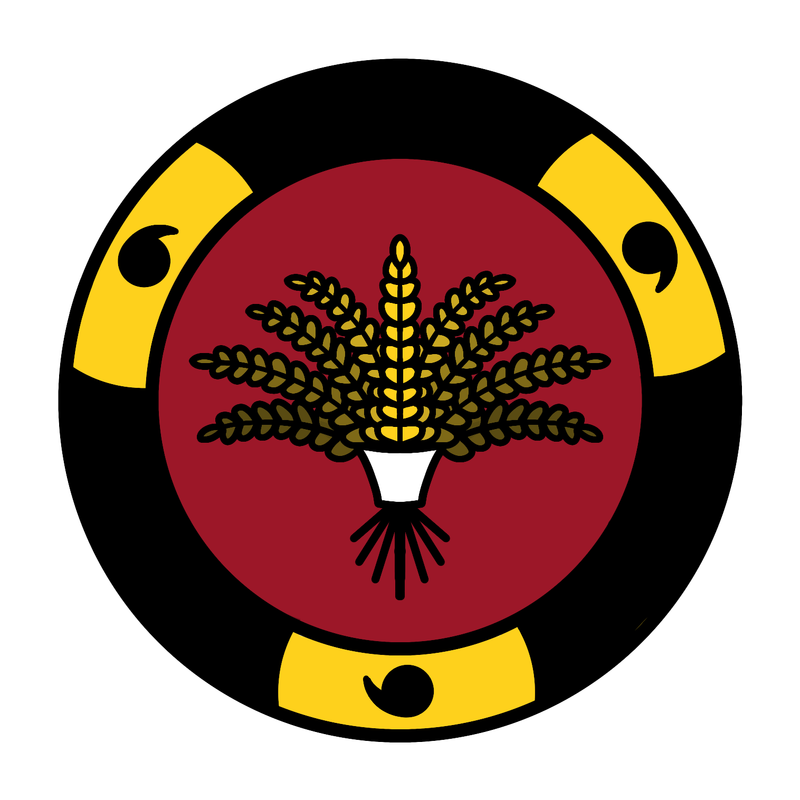
The clan has no particular restrictions regarding clothes, but they usually dress in warm colours and show only a little skin. Accessories often include jade, symbols of the clan (tomoes, wheat, the number nine) and painted/carved words representing the wearer or something they wish to become.
They keep their hair long, regardless of gender, generally putting it up in ponytails or buns to avoid it getting in the way.
 Nōgyō village
Descendants of the Priestesses of Inari and early Uchiha deserters
Daigo Kuzunoha, Daigo Namiko
About 600 years before the establishment of shinobi villages, a small group of people – who felt that a more spiritual approach of the religion –, had parted from the Ninshu followers and founded Nōgyō village. Among them were the, at the time, to be founders of the Daigo clan, who later became the main family of the village.
Being far away and out of the way of most conflicts of the world the Daigo clan and the other inhabitants of their village were able to live a relatively peaceful lifestyle growing crops and medicinal herbs.
Despite being a clan of ancient origin, the Daigo are surprisingly open for towards newcomers as long as they respectful of their lifestyle. This is partially so they can still hear and gain knowledge about the world and partially so that they can keep up a healthy genetically varied society. This means that the village itself is actually made up of multiple smaller clans and families besides the "ruling clan" and that mixed families are not only accepted but quite common.
Their only direct enemies are spirits of evil, created from the negative feelings of humans. They have several techniques (not ninjutsu) they use to guide these spirits to peace and set them to rest - or if that fails, bind them and seal them away, to protect people from them.
Leader's pick
Tamashii no chōsen/Challenge of the Soul
Traveling Years
Appointing of the Heir
Harvest Festival
Tamashii no chōsen/Challenge of the Soul:
At age 15 the members go through a ceremony, a spiritual challenge to gain the title of a full member - who can take offices in the village and whose word have a weight when it comes to making decisions -, and the right to paint their faces and body, if they fail, they must try the next year. It is considered slightly shameful to have to try more than twice.
The challenge consists of a private conversation with three of the senior priests/priestesses, who then present their foundings to the Leader. The leader then comes in and asks three questions (one based on each conversation). The aim of both, the conversations and the three questions is to access the young member's understanding of themselves and the principles of the clan, as well as their mentality towards life. If the answers are satisfactory the youth pass and gets to choose their paint patterns.
Traveling years:
Upon getting accepted as adults, each member of the clan must set off to a 5-year journey around the world. This is in order broaden their view and, since Nōgyō village itself is so remote, to have them see as much of how others live as possible. It is also tradition to bring back something the person deems to be valuable (be it an object, knowledge or a piece of art) from the outside world to the village.
Appointing of the Heir:
The leader names their heir (usually among the priests/priestesses, although on rare occasions people outside these positions have been chosen before) based on their own observations before their death. The name is written down on a piece of paper and locked away in a box for a whole month after the previous leader's passing, then it is opened in front of the possible candidates in a private meeting.
Harvest Festival:
The Harvest Festival is pretty much what it sounds, a big celebration at the end of harvest. The day after harvest the festivities last from dusk till sundown, at which point the members of the clan gather around the main shrine to pray and thank the Goddess of Harvest for the year. The freshly appointed shrine maidens of the clan then perform a traditional dance.
Selfdiscovery
Faith - in humans and the divine
Caring for others
Accepting (or fighting) one's inevitable humanity
Healing (physical and emotional)
Using one's gifts to bring harm upon others.
Blessing of Inari
They are partially based on the anime series Mononoke and the legends of Abe no Seimei.
They share an ancestry with the Uzumaki clan, however the two had split way before era of shinobi clans.
Since they don't live by the classical shinobi lifestyle, they are much more tolerant towards life circumstances that would make the aforementioned lifestyle difficult.
While they greatly value their kekkei genkai, they are not very pressed on keeping it alive or in its current form, due to this they are rather accepting of mixed clan and queer relationships.
Open in DiscordEdits on the dashboard do not change this post.